The Watsons Go to Birmingham – 1963 was met by my students with tepid interest at first. In the characters they sometimes saw themselves, a parent, a sibling, or a friend. They engaged with the light family drama of the novel as they would have with a sitcom: close enough to feel familiar but distant enough to be safe. The world of the Watsons was not their world but the world of their grandparents. All was well until a bomb exploded at the 16th Street Baptist Church in Birmingham, killing four little black girls and injuring dozens of others.
The Watsons is generally taught to middle school students but in 2008-09, I was teaching remedial English to freshmen at Anson High School. This was my first year of teaching. I had no prior experience, no training, and I was 23 years old. I had spent the previous year working as a security guard, an experience which the principal of AHS said would serve me well.
The bombing shook my students more than I thought it would. Up to that point, the novel had been about a black family from Flint, MI taking a road trip to visit relatives in Alabama. As we’d traveled with the family to Birmingham, I had tried to provide as much context as I thought was relevant, answering questions about record players, Motown, segregation, and life without power steering or cell phones. But nothing really prepared my students for the bombing. As much violence and suffering as some of them had seen in their young lives, none of them anticipated that.
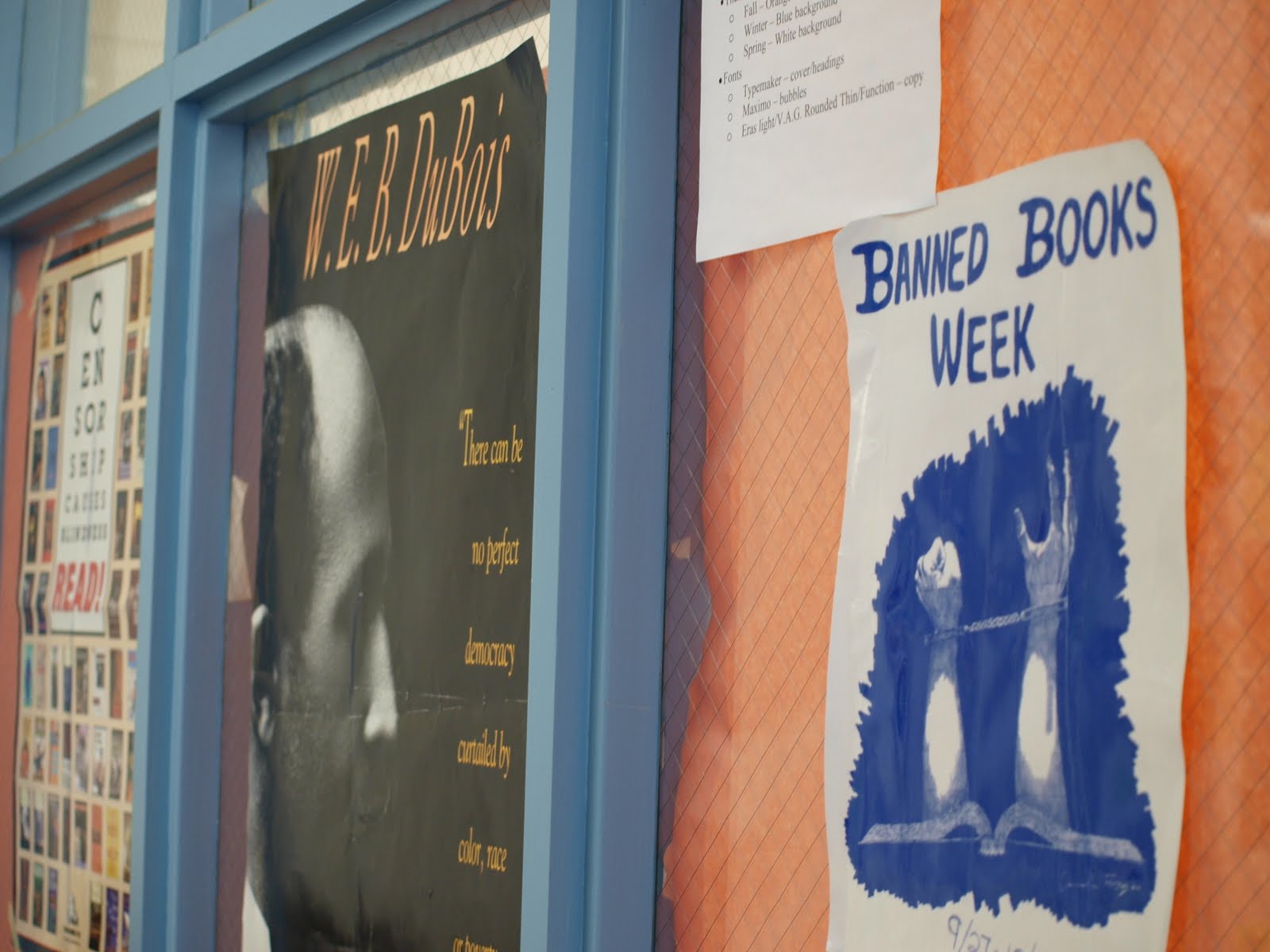
Throughout my teaching career at AHS, my classroom changed three times, and each time I meticulously redecorated my new space. A poster of Kurt Cobain, pictures of Bertrand Russell and Martin Luther King, Jr., sports memorabilia, quotations taped to the wall and even the ceiling, and so on. Often, I drew pictures in dry erase marker on the board to coincide with the season or the book we were reading, sometimes both (Santa Claus asking HAL-9000 to open the pod bay doors, for example). Along with all this were two posters promoting the American Library Association’s Banned Books Week.
The Watsons (published 1995) has been challenged a few times over the years despite the fact that it is considered a classic of youth literature. Still, the challenges have been relatively scattered and mild. Given the recent moral panic over children’s and adolescent literature, I don’t expect that pattern to continue.
Fortunately or perhaps unfortunately, it fell to me to explain segregation and Jim Crow to my students in that small, radiator-heated classroom in 2008. About half of the students in the class were 17 or older, making yet another attempt at English I. There were no white students in that class, though the demographics of the county contributed to this lack of diversity. Prior to the outbreak of the Civil War Anson County had, as far as North Carolina was concerned, a high concentration of slaves. The demographic balance of the county has changed very little since emancipation.
So, I explained the Klan to my students. We talked about the Great Migration. I didn’t want to drown my students in context but where do you stop? Of course, I never gave it a second thought that I was teaching history to my students in an English class. It had to be done. What kind of teacher would I have been if I had simply abandoned my students to a novel about the Civil Rights movement without any context?
Ultimately, I have to give all the credit to my students. They were curious as much as they were courageous. To this day, the students I taught at Anson High School remain some of the most open-minded and open-hearted people I’ve ever met. At times, they were almost comically precocious. Given my strange curly hair, at times they would ask me if I was ” all white”, questioning my ethnic provenance out of a genuine wondering.
In so many ways, 2008 seems like a lifetime ago. Since then, I’ve been laid off from that same school, earned my MA, raised a child, lost my mind and possibly my soul. I’ve been teaching at a community college for almost ten years now and have watched, often with dismay, the changes and challenges that our public schools have faced.
Now, I wonder if I would be allowed to observe Banned Books Week. Would it be acceptable for me to maintain a bookshelf from which students could select books to read during their free time? Would I be allowed to teach The Watsons or to discuss difficult topics with my students? What about my ALA posters?
I still cling to the words attributed to Robert Maynard Hutchins, arguing that the “idea of education is to unsettle the minds of the young and inflame their intellects.” But how acceptable is that now? Now, even the school system where my education first began seems to have a spine made of jelly. I have nothing but empathy for my colleagues on the primary and secondary levels. They are facing down multiple crises while the North Carolina General Assembly is openly hostile to the work that they do.
Ultimately, history shows that those who seek to suppress information are never on the winning side, and so it will go with the newest batch of anti-intellectual warriors. Culture war is nothing but a bad faith endeavor. There can be no victory except for the ruling class.
However, the damage done may be greater than our ability to repair for quite a long time, even a generation or two. That said, I have only become more intransigent and rebellious since my time as a high school teacher, and I hope to do whatever I can to stand in solidarity with fellow educators.
 An Unhappy Consciousness